Inside Federal Logistics Modernization: Why Automation Is Becoming Central to Cost Control
Reshaping Federal Warehouse Modernization Through Automation
Federal logistics organizations are entering a new phase of warehouse modernization. While structural durability and compliance remain foundational, agencies responsible for national defense sustainment are increasingly evaluating automation as a long-term strategy for operational stability and cost control.
For organizations such as the Defense Logistics Agency and other federal logistics networks, modernization discussions are no longer limited to storage density or facility upgrades. The focus has shifted toward improving throughput consistency while reducing long-term exposure to labor variability. That shift is reshaping how government warehouse automation projects are planned and evaluated.
Operational Cost Stability Is Driving Change
Many federal warehouse operations are supported through large, multi-year service contracts. As those agreements evolve, agencies are analyzing how facility design and system infrastructure influence ongoing operating costs.
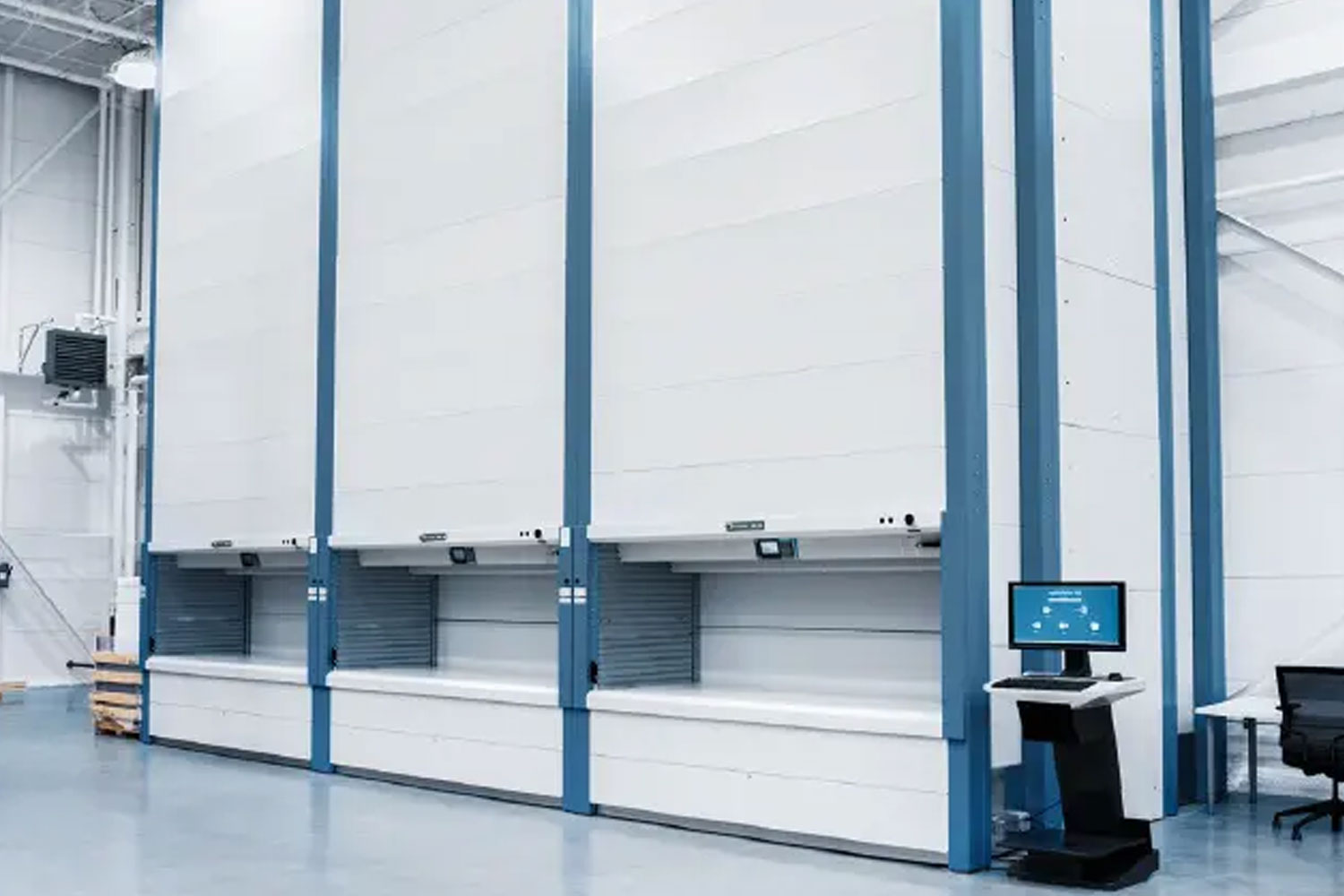
Automated Storage Systems, including miniload systems, automated parts storage, shuttle-based pallet storage, and robotic storage and retrieval technologies, is increasingly viewed as infrastructure that can stabilize performance over time. By reducing manual travel, minimizing repetitive handling, and integrating conveyor systems for controlled flow, agencies can create more predictable operational models.
When federal buyers conduct market research on warehouse modernization or logistics automation, cost stability has become part of the conversation.
Throughput Consistency Over Workforce Expansion
In defense logistics environments, the objective is sustained performance rather than short-term growth. Technologies such as unit load automation, high-density storage platforms, and integrated conveyor networks are evaluated for their ability to maintain steady output regardless of workforce fluctuations.
Federal logistics organizations prioritize systems that reduce congestion, streamline movement between zones, and support consistent order fulfillment without continual headcount expansion. Automation is attractive not because it is complex, but because it creates structural reliability.
Modernization efforts increasingly emphasize infrastructure that supports predictable flow and measurable efficiency gains.
Integration Within Existing Federal Facilities
Government warehouse modernization rarely occurs in new buildings. Many federal depots and distribution centers were constructed decades ago. Installing robotic storage systems, automated retrieval equipment, or deep-lane storage technologies requires careful integration with floor loading, fire suppression coordination, electrical capacity, and security controls.
Agencies evaluating federal logistics automation are not simply comparing equipment capabilities. They are assessing whether modernization strategies can integrate cleanly into existing facilities without disrupting compliance or operational continuity.
Technology must align with infrastructure realities.
Density, Space Optimization, and Asset Planning
Automation also addresses long-standing space constraints across federal facilities. Miniload systems and automated parts storage allow agencies to increase cubic utilization within established footprints. High-density pallet systems and robotic retrieval platforms reduce aisle requirements and manual travel distances.
Rather than expanding real estate portfolios, modernization strategies frequently focus on extracting greater performance from current facilities. Vertical expansion, controlled retrieval, and conveyor-driven material flow support both density and operational efficiency.
For agencies researching federal depot storage modernization, automation and space optimization are increasingly linked.
Robotics in Targeted Federal Applications
Robotics is gaining attention within federal logistics environments, particularly in applications that reduce repetitive manual handling and improve safety. Robotic pallet movement, automated case retrieval, and assistive storage technologies are evaluated for their ability to reduce strain on personnel while improving consistency.
In federal facilities, robotics is implemented where it supports measurable operational outcomes. The objective is not widespread experimentation, but practical deployment that enhances readiness.
Compliance Remains Embedded in Modernization
Even as automation becomes more central, federal procurement requirements remain constant. Buy American provisions, GSA contracting pathways, documentation standards, and inspection protocols shape modernization from the outset.
Agencies researching government warehouse automation systems are evaluating more than technical performance. They are assessing procurement alignment, lifecycle support, and the ability to execute within established federal frameworks.
Efficiency gains that complicate compliance do not meet federal objectives.
How AW Systems Approaches Federal Automation
American Warehouse Systems supports federal warehouse modernization by aligning automation strategy with infrastructure discipline and long-term operational goals.
When evaluating robotic storage and retrieval systems, automated parts solutions, integrated conveyor platforms, or high-density pallet storage within government facilities, AW-Systems focuses on integration clarity, serviceability, and realistic cost-control outcomes.
Automation is not presented as a standalone upgrade. It is approached as infrastructure that strengthens reliability, reduces long-term operational exposure, and integrates seamlessly into federal logistics environments.
Modernization as Long-Term Infrastructure Strategy
Federal logistics modernization is increasingly centered on controlled, purposeful automation. Agencies responsible for national defense sustainment are evaluating how warehouse infrastructure decisions today influence operational cost structures for years to come.
For those conducting market research on DLA warehouse modernization, federal logistics automation, or government storage and retrieval systems, the objective is straightforward. Modernization must enhance reliability, improve efficiency, and integrate cleanly into established federal facilities.
American Warehouse Systems approaches every modernization discussion with that long-term perspective.
Contact our federal project experts today to discuss a seamless, turnkey solution for your facility.
One Project. One Vendor.
GSA procurement experts since 1990. Optimized government facility efficiency.
The Industry Standard for Federal Integration
For over 36 years, American Warehouse Systems has served as the premier GSA Prime Contractor for complex federal material handling and storage aid systems worldwide. Our expertise goes beyond providing equipment; we understand the intricacies of Federal Acquisition Regulations (FAR), Buy American requirements, and the specific security needs of mission-critical facilities.