463L Pallet Storage Systems: Strengthening Military Air Cargo Infrastructure

Optimizing the storage and staging of the 463L Master Pallet is critical

The 463L pallet has served as the backbone of United States military air cargo operations since the mid-1960s. Originally developed by the U.S. Air Force to standardize cargo loading across aircraft platforms, the 463L system created a common pallet and restraint method that allowed rapid deployment and efficient aircraft utilization.

Today, 463L pallets remain central to global air mobility operations. From C-130 and C-17 aircraft to forward staging bases and continental depots, the pallet continues to define how equipment and supplies move through the military logistics network.

While the pallet itself has remained consistent, the facilities that store, stage, and manage these loads are evolving, requiring modern 463L pallet storage systems to meet increasing demands for density and deployment speed.
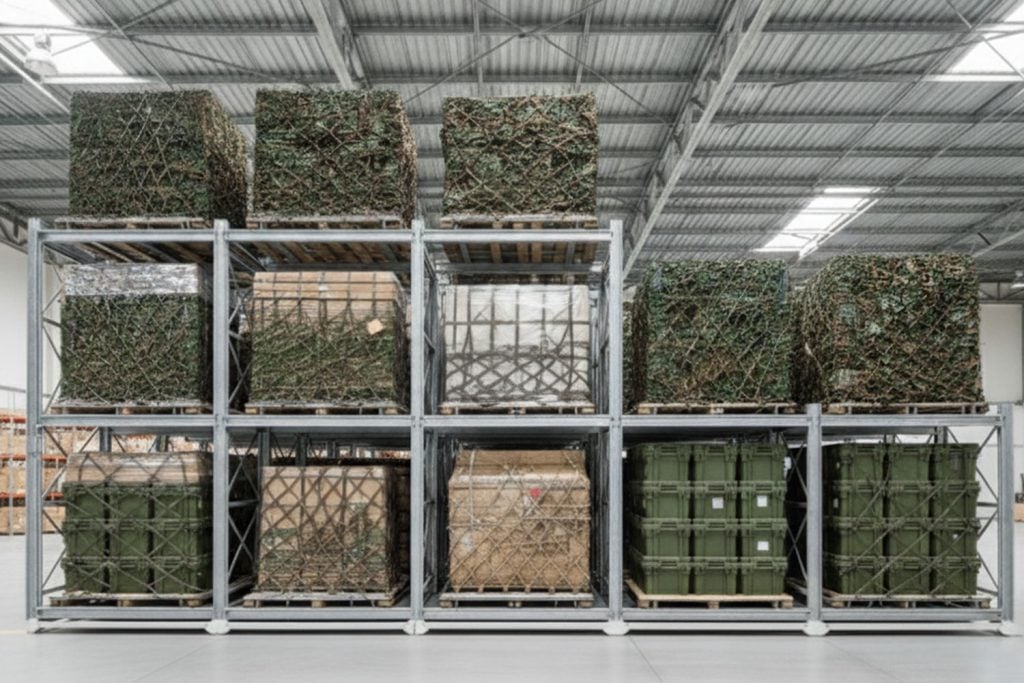
463L Pallet Rack - Military Air Cargo Rack

463L Pallet Specifications: An Enduring Logistics Standard

A standard 463L pallet measures 88″ x 108″ and is constructed of aluminum with a balsa wood core, designed to balance durability with weight efficiency. When combined with nets and tie-down systems, it allows cargo to be secured for air transport under demanding operational conditions.

The strength of the 463L system lies in its standardization. Aircraft loading systems, ground handling equipment, and staging procedures are all built around this common footprint. That consistency has supported decades of rapid deployment capability.

Because 463L pallets are so deeply embedded in military logistics, the infrastructure that supports them must be equally disciplined.

Addressing 463L Storage Challenges in Modern Defense Facilities

Many federal depots and air logistics centers were constructed long before today’s inventory volumes and operational tempo. Historically, 463L pallets were often floor stacked or stored in conventional rack systems. As operations expanded, congestion and inefficient staging became common challenges.

Agencies conducting market research on 463L pallet storage systems are frequently evaluating how to improve organization, density, and safety within existing facilities. Loaded 463L pallets can represent significant weight, and handling them requires both structural integrity and controlled access.

Improving storage is not about changing the pallet. It’s about strengthening the infrastructure around it.

Multi-Level Engineering and High-Density Staging Systems

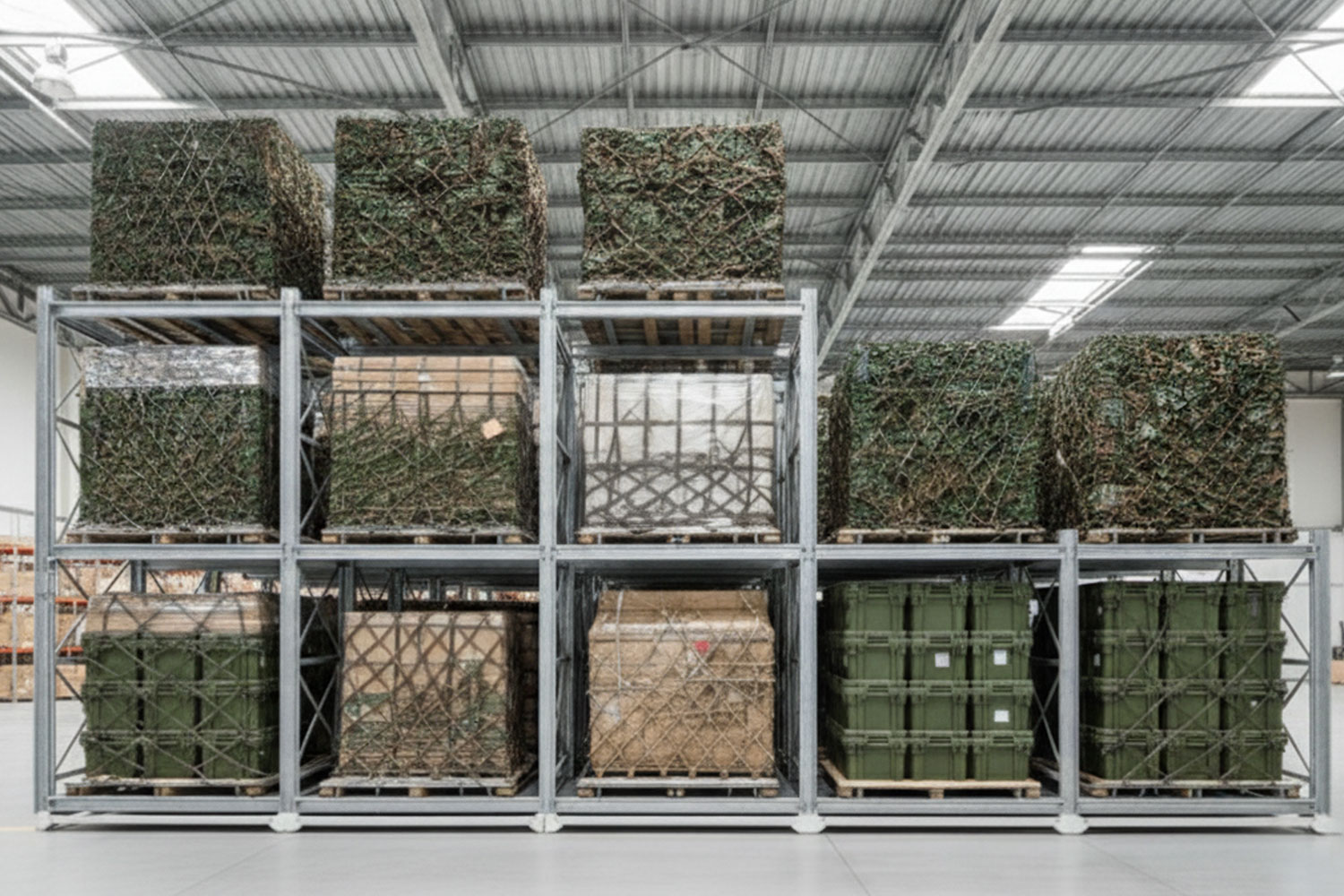
One proven approach to 463L modernization is the use of engineered rack systems designed specifically for heavy-duty pallet loads. Multi-level storage platforms supported by structural steel can significantly increase cubic utilization while maintaining organized access.

Push systems using ball transfers or roller beds allow controlled pallet movement within defined lanes. In some facilities, vertical lifting equipment such as freight elevators or vertical reciprocating conveyors supports movement between levels, reducing congestion on the main floor.

These engineered solutions preserve the standardized nature of the 463L pallet while improving staging control and space efficiency.

Optimizing Air Cargo Workflows: Reducing Repositioning and Congestion

In many legacy environments, repositioning a 463L pallet requires extensive lift truck travel and open-floor maneuvering. Structured rack systems with integrated roller lanes reduce unnecessary movement and create defined staging zones.

Modernization in this context does not mean replacing a mission-proven platform with unnecessary complexity. It means designing storage infrastructure that reduces friction and supports rapid access when deployment requirements arise.

For agencies responsible for air cargo support, controlled staging directly influences readiness.

Structural Integrity and Government Compliance for Heavy-Duty Racking

Loaded 463L pallets demand serious structural engineering. Rack systems must be designed to handle concentrated loads, impact forces, and long service cycles. Fire suppression coordination, aisle planning, and safety compliance remain critical elements of facility design.

Agencies researching government pallet rack systems for 463L applications evaluate more than beam capacity. They assess long-term durability, inspection alignment, and integration with existing facility constraints.

In defense logistics facilities, infrastructure must perform reliably under sustained operational demand.

Integrating 463L Pallet Storage into Federal Warehouse Modernization

As federal warehouse modernization initiatives advance, 463L pallet storage is often evaluated alongside broader layout improvements. Defined transport lanes, structured staging areas, and improved material flow planning contribute to safer and more efficient handling.

While some modernization efforts across federal logistics include automation in other areas of the facility, 463L operations typically prioritize durability and structured movement over full automation. The focus remains on strengthening infrastructure to support the standardized pallet system that has served military operations for decades.

Maximizing Air Mobility Readiness Through Engineered Design

The 463L pallet remains indispensable to United States military air cargo operations. As federal facilities evaluate warehouse modernization strategies, the systems that support these pallets must deliver density, durability, and organized access without compromising safety or readiness.

Agencies conducting market research on 463L pallets, military pallet storage systems, or air cargo warehouse infrastructure are ultimately seeking engineered solutions that align with decades of standardized logistics practice.

How AW Systems Supports 463L Infrastructure

American Warehouse Systems supports federal agencies with engineered 463L pallet storage systems designed for structural integrity, compliance alignment, and long-term serviceability.

Our approach emphasizes disciplined staging design, heavy-duty rack engineering, and integration with facility constraints. Whether implementing single-level high-capacity rack or multi-tier systems supported by vertical lift equipment, AW Systems focuses on practical infrastructure that enhances operational control.

Ready to modernize your air cargo infrastructure? Contact our federal project experts today to discuss an engineered, turnkey 463L pallet storage system tailored for your facility’s evolving needs.


AW Systems: One Project. One Vendor. 

GSA procurement experts since 1990. Optimized government facility efficiency.

The Industry Standard for Federal Integration

For over 36 years, American Warehouse Systems has served as the premier GSA Prime Contractor for complex federal material handling and storage aid systems worldwide. Our expertise goes beyond providing equipment; we understand the intricacies of Federal Acquisition Regulations (FAR), Buy American requirements, and the specific security needs of mission-critical facilities. 
Inside Federal Logistics Modernization: Why Automation Is Becoming Central to Cost Control

Reshaping Federal Warehouse Modernization Through Automation

Federal logistics organizations are entering a new phase of warehouse modernization. While structural durability and compliance remain foundational, agencies responsible for national defense sustainment are increasingly evaluating automation as a long-term strategy for operational stability and cost control.

For organizations such as the Defense Logistics Agency and other federal logistics networks, modernization discussions are no longer limited to storage density or facility upgrades. The focus has shifted toward improving throughput consistency while reducing long-term exposure to labor variability. That shift is reshaping how government warehouse automation projects are planned and evaluated.

Automated Storage and Retrieval Systems for Federal Government Agencies

Operational Cost Stability Is Driving Change

Many federal warehouse operations are supported through large, multi-year service contracts. As those agreements evolve, agencies are analyzing how facility design and system infrastructure influence ongoing operating costs.

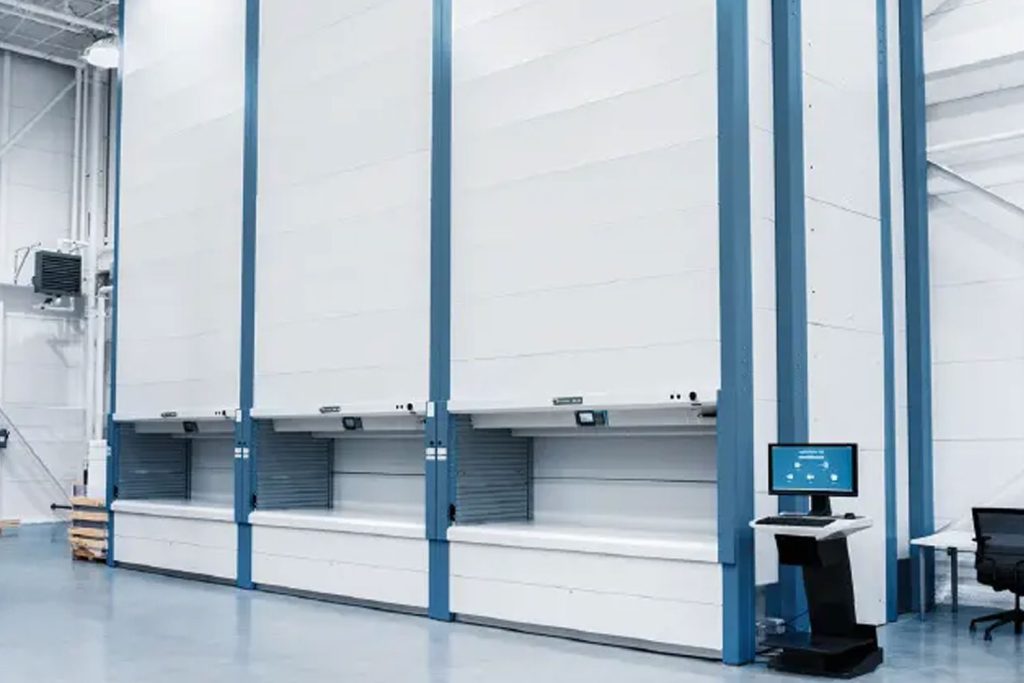
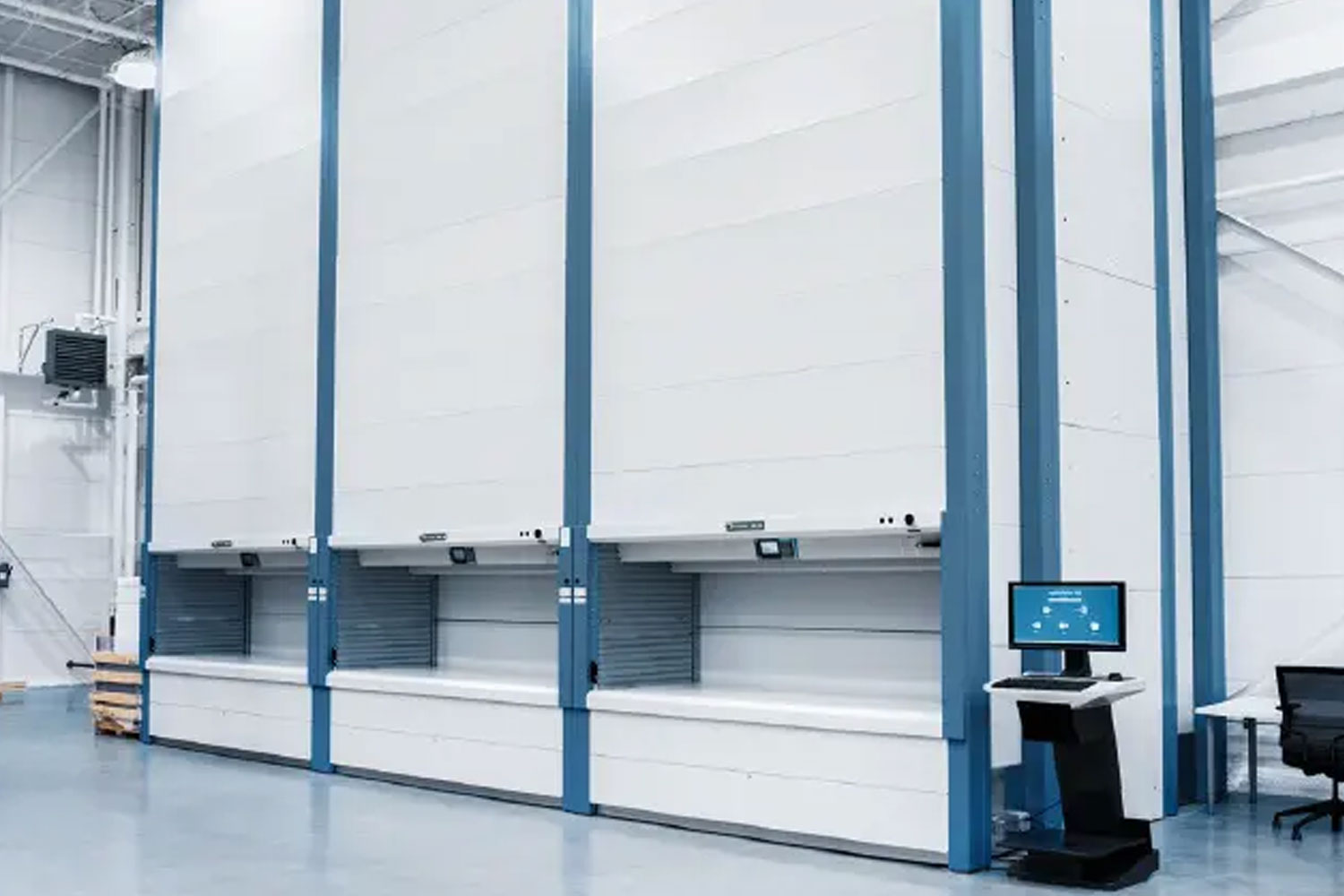
Automated Storage Systems, including miniload systems, automated parts storage, shuttle-based pallet storage, and robotic storage and retrieval technologies, is increasingly viewed as infrastructure that can stabilize performance over time. By reducing manual travel, minimizing repetitive handling, and integrating conveyor systems for controlled flow, agencies can create more predictable operational models.

When federal buyers conduct market research on warehouse modernization or logistics automation, cost stability has become part of the conversation.

Throughput Consistency Over Workforce Expansion

In defense logistics environments, the objective is sustained performance rather than short-term growth. Technologies such as unit load automation, high-density storage platforms, and integrated conveyor networks are evaluated for their ability to maintain steady output regardless of workforce fluctuations.

Federal logistics organizations prioritize systems that reduce congestion, streamline movement between zones, and support consistent order fulfillment without continual headcount expansion. Automation is attractive not because it is complex, but because it creates structural reliability.

Modernization efforts increasingly emphasize infrastructure that supports predictable flow and measurable efficiency gains.

Integration Within Existing Federal Facilities

Government warehouse modernization rarely occurs in new buildings. Many federal depots and distribution centers were constructed decades ago. Installing robotic storage systems, automated retrieval equipment, or deep-lane storage technologies requires careful integration with floor loading, fire suppression coordination, electrical capacity, and security controls.

Agencies evaluating federal logistics automation are not simply comparing equipment capabilities. They are assessing whether modernization strategies can integrate cleanly into existing facilities without disrupting compliance or operational continuity.

Technology must align with infrastructure realities.

Density, Space Optimization, and Asset Planning

Automation also addresses long-standing space constraints across federal facilities. Miniload systems and automated parts storage allow agencies to increase cubic utilization within established footprints. High-density pallet systems and robotic retrieval platforms reduce aisle requirements and manual travel distances.

Rather than expanding real estate portfolios, modernization strategies frequently focus on extracting greater performance from current facilities. Vertical expansion, controlled retrieval, and conveyor-driven material flow support both density and operational efficiency.

For agencies researching federal depot storage modernization, automation and space optimization are increasingly linked.

Robotics in Targeted Federal Applications

Robotics is gaining attention within federal logistics environments, particularly in applications that reduce repetitive manual handling and improve safety. Robotic pallet movement, automated case retrieval, and assistive storage technologies are evaluated for their ability to reduce strain on personnel while improving consistency.

In federal facilities, robotics is implemented where it supports measurable operational outcomes. The objective is not widespread experimentation, but practical deployment that enhances readiness.

Compliance Remains Embedded in Modernization

Even as automation becomes more central, federal procurement requirements remain constant. Buy American provisions, GSA contracting pathways, documentation standards, and inspection protocols shape modernization from the outset.

Agencies researching government warehouse automation systems are evaluating more than technical performance. They are assessing procurement alignment, lifecycle support, and the ability to execute within established federal frameworks.

Efficiency gains that complicate compliance do not meet federal objectives.

How AW Systems Approaches Federal Automation

American Warehouse Systems supports federal warehouse modernization by aligning automation strategy with infrastructure discipline and long-term operational goals.

When evaluating robotic storage and retrieval systems, automated parts solutions, integrated conveyor platforms, or high-density pallet storage within government facilities, AW-Systems focuses on integration clarity, serviceability, and realistic cost-control outcomes.

Automation is not presented as a standalone upgrade. It is approached as infrastructure that strengthens reliability, reduces long-term operational exposure, and integrates seamlessly into federal logistics environments.

Modernization as Long-Term Infrastructure Strategy

Federal logistics modernization is increasingly centered on controlled, purposeful automation. Agencies responsible for national defense sustainment are evaluating how warehouse infrastructure decisions today influence operational cost structures for years to come.

For those conducting market research on DLA warehouse modernization, federal logistics automation, or government storage and retrieval systems, the objective is straightforward. Modernization must enhance reliability, improve efficiency, and integrate cleanly into established federal facilities.

American Warehouse Systems approaches every modernization discussion with that long-term perspective.

Contact our federal project experts today to discuss a seamless, turnkey solution for your facility.


One Project. One Vendor. 

GSA procurement experts since 1990. Optimized government facility efficiency.

The Industry Standard for Federal Integration

For over 36 years, American Warehouse Systems has served as the premier GSA Prime Contractor for complex federal material handling and storage aid systems worldwide. Our expertise goes beyond providing equipment; we understand the intricacies of Federal Acquisition Regulations (FAR), Buy American requirements, and the specific security needs of mission-critical facilities.