Federal Buyers Guide to Market Research: Navigating GSA Warehouse Systems & Automation

How Federal Buyers Conduct Market Research for Warehouse Systems and Automation

Long before a solicitation is released, federal buyers are already researching. Contracting officers, facility managers, engineers, and logistics personnel routinely turn to Google to understand options, terminology, and risk as they plan warehouse modernization efforts. Searches for federal warehouse storage solutions, GSA material handling systems, and government warehouse automation often begin months, and sometimes years, before a formal procurement takes shape.

This early market research phase plays a critical role in how scopes are defined, how budgets are framed, and which vendors ultimately make it onto an agency’s short list. Understanding how to evaluate systems and suppliers during this phase can significantly reduce risk later in the procurement process.
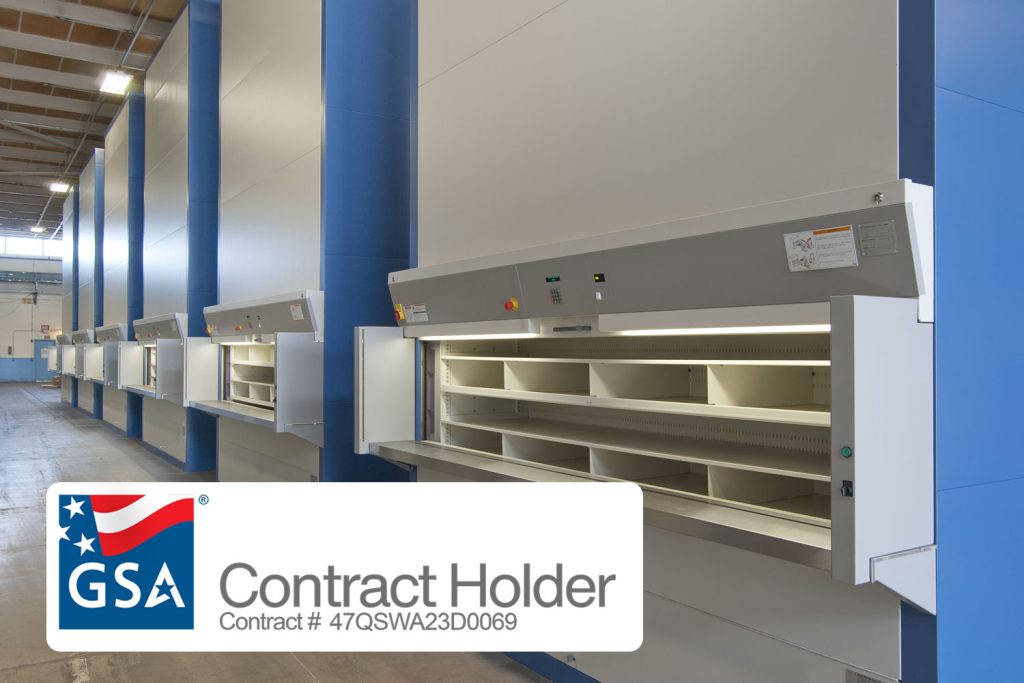
Automated Storage and Retrieval Systems on GSA Contract

Market Research Comes Before the RFP

Federal procurement is intentionally structured to ensure fairness, transparency, and compliance. That structure also means agencies must complete much of their due diligence before any vendor engagement becomes formal. Online market research allows agencies to build foundational knowledge, understand available technologies, and identify delivery models that align with federal requirements.

For warehouse projects, this research often begins with system-level questions. Buyers look for information on mezzanine systems, secure storage solutions, automated storage equipment, and GSA-approved warehouse systems. At this stage, agencies are not selecting vendors. They are developing an informed understanding of what is possible and what risks may exist.

Evaluating More Than the Equipment

One of the most common mistakes in federal warehouse market research is focusing too narrowly on individual products. A mezzanine, vertical lift module, storage rack, or locker system rarely exists in isolation within a government facility. Each system must integrate with building structure, electrical power, lighting, fire suppression, and security requirements.

Federal buyers who limit their research to equipment specifications often discover too late that the real challenge lies in integration. Equipment that appears ideal on paper can introduce complications if the vendor lacks experience coordinating ancillary trades or navigating federal compliance requirements.

As a result, experienced buyers increasingly evaluate not only what a vendor sells, but how that vendor delivers.

The Importance of Federal Experience

Federal facilities operate differently than commercial warehouses. Procurement pathways, inspection processes, and compliance obligations influence every stage of a project. Buyers conducting market research should look for vendors with demonstrated experience supporting federal material handling systems and government warehouse environments.

This experience matters because it shapes how projects are planned. Vendors familiar with GSA procurement, Buy American requirements, and federal inspection processes tend to anticipate challenges rather than react to them. That foresight reduces schedule risk and minimizes costly changes during execution.

Identifying Integration Risk Early

Market research is the best time to identify integration risk. When responsibility for a warehouse project is divided across multiple vendors, agencies often become the de facto integrator. This creates coordination challenges that extend timelines and complicate accountability.

Federal buyers researching turnkey warehouse solutions often do so after experiencing these challenges firsthand. Early research that considers delivery models, integration capability, and scope ownership helps agencies avoid fragmented projects and unclear responsibility.

This is not about selecting a vendor prematurely. It is about understanding which approaches align with the realities of federal facilities.

Understanding GSA Schedules and Procurement Alignment

Many federal buyers conducting market research focus specifically on GSA warehouse storage solutions. GSA schedules can streamline procurement, but they do not eliminate the need for careful evaluation. A system being available on GSA does not automatically ensure that it can be delivered as a complete, functional solution.

Effective market research considers how systems are procured, how scopes are structured, and how supporting work is coordinated under a single contract. This understanding allows contracting officers and program managers to develop procurements that support timely, compliant execution.

Applying Research to Real Federal Facilities

In government warehouses, depots, and logistics centers, success is measured by readiness and reliability. Systems must be serviceable, compliant, and integrated into existing operations without disruption. Market research that reflects these priorities leads to stronger outcomes.

Federal buyers who approach research thoughtfully tend to ask broader questions. How will this system be installed? Who coordinates supporting trades? How is compliance managed? What happens if conditions change during execution? These considerations shape better procurements long before a contract is awarded.

How AW-Systems Supports Informed Federal Decisions

American Warehouse Systems supports federal agencies by providing clear, practical information during the market research phase. Our role is not to push a single product, but to help agencies understand how storage and material handling systems function within real federal environments.

By focusing on complete solutions, integration, and procurement alignment, AW-Systems helps federal buyers move from research to execution with confidence. This approach reflects decades of experience supporting government warehouse projects across a wide range of applications.

Market Research Is Risk Management

Prime integration is not a premium feature. In federal environments, it is a safeguard. Integration ensures that systems are delivered ready for use, inspections proceed smoothly, and facilities can support their operational missions without unnecessary delay.

Federal warehouse projects succeed when responsibility is clear, scope is aligned, and accountability rests with a partner structured to manage it.

Bridge the gap between market research and execution

Don’t let integration gaps derail your warehouse modernization. Partner with AW Systems during your planning phase to ensure your GSA-procured systems are fully coordinated, compliant, and mission-ready.

Contact our federal project experts today to discuss a seamless, turnkey solution for your facility.


One Project. One Vendor. 

GSA procurement experts since the 1990s. Optimized government facility efficiency.

The Industry Standard for Federal Integration

For over 36 years, American Warehouse Systems has served as the premier GSA Prime Contractor for complex federal material handling and storage aid systems worldwide. Our expertise goes beyond providing equipment; we understand the intricacies of Federal Acquisition Regulations (FAR), Buy American requirements, and the specific security needs of mission-critical facilities. 

Why Federal Warehouse Projects Fail Without a Prime Integrator: Reducing Risk in GSA Material Handling

In the federal environment, a procurement is only successful if the equipment is operational, compliant, and integrated into the facility’s mission. However, a significant accountability gap often exists between the point of purchase and the final inspection.

While a standard vendor is responsible only for delivering a product, a prime integrator assumes responsibility for the entire project. This includes ensuring that complex storage systems interface seamlessly with building codes, fire suppression, and electrical infrastructure.

Without this single point of contact, federal agencies often find themselves unintentionally acting as their own general contractors. They are left managing scope gaps and trade conflicts that lead to cost overruns and mission delays. Understanding this distinction is the first step towards executing successful projects.

GSA Project Manager

Why Federal Facilities Need a Prime Integrator, Not Just a Vendor

Federal agencies routinely conduct online market research before initiating any formal procurement. Contracting officers, facility managers, and engineers search for information on federal warehouse storage solutions, GSA material handling systems, and turnkey infrastructure providers long before a solicitation is released. What they often find is a fragmented marketplace, vendors focused on individual products rather than complete outcomes.

Federal facilities are complex by design. Government warehouses, maintenance depots, and logistics centers support mission-critical operations and operate under layers of regulation that do not exist in commercial environments. Yet when it comes time to modernize storage systems, install mezzanines, or integrate material handling equipment, projects are still frequently treated as isolated equipment purchases.

They are not.


The reality of federal warehouse projects

A typical federal material handling project involves far more than the system itself. Mezzanine platforms, storage racking, TA-50 gear lockers, secure wire partitions, or automated storage systems must all interface with existing buildings, utilities, and safety systems. Concrete foundations, floor loading, electrical power, lighting, fire suppression coordination, and secure access controls are not optional. They are required for the system to function inside a government facility.

Many vendors sell only the system. Once their equipment is delivered, responsibility for everything else shifts back to the agency. That leaves federal buyers managing multiple contractors, coordinating schedules, resolving scope gaps, and absorbing the risk when something goes wrong.

This is where federal projects begin to struggle.


Fragmentation Creates Risk, Not Efficiency

When responsibility is divided across multiple vendors and trades, accountability becomes unclear. One contractor waits on another. Inspections uncover conflicts that should have been addressed during design. Change orders become common, and schedules stretch beyond what was originally planned.

In commercial facilities, these issues create frustration and cost overruns. In federal environments, the impact is more significant. Delays affect readiness. Storage systems sit idle while agencies navigate additional procurement actions. Equipment intended to improve efficiency remains unused because ancillary work was never fully coordinated.

This is not a failure of effort or intent. It is the predictable outcome of fragmented responsibility.


Why Federal Projects Require a Different Approach

Federal procurement is fundamentally different from commercial purchasing. Government buyers must comply with FAR requirements, Buy American provisions, and agency-specific contracting rules. Many projects are procured through GSA schedules, where scope clarity and compliance matter as much as price. Security considerations often involve controlled areas, sensitive materials, or enhanced physical protection. Overseas installations add further complexity, including host-nation coordination and logistical constraints.

In this environment, managing a federal warehouse project through disconnected vendors increases risk rather than reducing it. What agencies need is a prime integrator, not simply a system supplier.


What does a GSA Prime Integrator Provide

A prime integrator assumes responsibility for the complete project, not just the equipment. This includes system selection, layout development, integration with building infrastructure, and coordination of all supporting trades. The integrator owns the sequencing, the interfaces, and the outcome.

For federal buyers conducting market research on turnkey material handling systems or GSA warehouse solutions, this distinction matters. A prime integrator provides a single point of accountability. The agency has one contract, one point of contact, and one entity responsible for delivering a functional, compliant solution.

This approach is not about convenience. It is about managing risk in federal facilities.


The Cost of “No Single Point” Accountability

When no party owns the full scope, agencies are forced into a coordination role they were never intended to fill. Contracting officers manage interfaces between vendors. Facility managers chase schedules across multiple contractors. Inspectors identify conflicts late in the process, after changes become expensive and time-consuming.

The result is familiar across government warehouse projects. Timelines extend. Budgets tighten. Operational improvements are delayed. None of this improves mission readiness.

A system that remains incomplete due to coordination gaps provides no value, regardless of how advanced the equipment may be.


How AW-Systems Approaches Federal Integration

American Warehouse Systems has supported federal and government warehouse projects since the 1990s with a different philosophy. AW-Systems operates as a prime integrator for federal material handling and storage systems, assuming responsibility for both the core system and the ancillary work required to make it operational.

This includes coordination of concrete, structural considerations, electrical power, lighting, fire suppression interfaces, and secure enclosures as part of a unified scope. From early planning through installation, AW-Systems remains accountable for how the system functions within the facility, not just how it is delivered.

By managing the entire scope, AW-Systems eliminates the gaps that commonly delay federal projects and replaces them with continuity and clarity.


Procurement Confidence for Federal Buyers

Execution alone is not enough in federal procurement. Agencies need confidence that purchasing aligns with established contracting frameworks. Many government buyers conducting market research look specifically for GSA approved warehouse systems and vendors experienced with federal procurement processes.

AW-Systems supports federal agencies through active GSA schedule contracts, registration in the System for Award Management, and compliance with Buy American requirements where applicable. This structure allows contracting officers and project managers to move forward without layering multiple procurements for what is, in reality, a single integrated project.


Integration Is Risk Management

Prime integration is not a premium feature. In federal environments, it is a safeguard. Integration ensures that systems are delivered ready for use, inspections proceed smoothly, and facilities can support their operational missions without unnecessary delay.

Federal warehouse projects succeed when responsibility is clear, scope is aligned, and accountability rests with a partner structured to manage it.


A Better Way Forward for Federal Facilities

Federal facilities do not fail because of poor equipment selection. They fail when responsibility is divided and ownership is unclear. By engaging a prime integrator, agencies shift coordination and risk away from internal teams and place it with a partner equipped to manage complex, compliant projects.

American Warehouse Systems was founded on this principle – one project, one point of accountability, one partner responsible for delivering complete, compliant material handling systems for government facilities. For federal buyers researching turnkey warehouse solutions, prime integration is not optional. It’s how projects get completed and missions stay supported.

Ready to modernize your facility with a complete, turnkey solution?  Contact an AW-Systems prime integration expert, your GSA-approved partner for fully coordinated storage and material handling systems designed specifically for federal environments.


One Project. One Vendor. 

GSA procurement experts since the 1990s. Optimized government facility efficiency.

The Industry Standard for Federal Integration

For over 36 years, American Warehouse Systems has served as the premier GSA Prime Contractor for complex federal material handling and storage aid systems worldwide. Our expertise goes beyond providing equipment; we understand the intricacies of Federal Acquisition Regulations (FAR), Buy American requirements, and the specific security needs of mission-critical facilities.